
A burning smell that fades fast
Early in the season, a short burning smell when the AC first kicks on can just be dust burning off the coil or the heat strip inside. It should clear in a few minutes and not come back once the unit has run a while.
A burning smell from your AC usually means dust burning off a hot part, or wiring and a motor working harder than they should. With New Mexico summers running hot and dry for months, your system cycles on almost every day from June through September, and that steady load wears on the motor bearings and the electrical connections first. If the smell is faint and goes away after the first few minutes of a run, it may just be dust on the coil or in the ducts burning off after the unit sat idle. If it's sharp, like burning plastic or hot metal, and it keeps coming back, that points to a motor overheating or wiring insulation breaking down inside the unit. Either way, the smell is the system telling you something is already stressed. Running it longer in that state risks a bigger repair, so it's worth having someone look at it before the next hot stretch.

Early in the season, a short burning smell when the AC first kicks on can just be dust burning off the coil or the heat strip inside. It should clear in a few minutes and not come back once the unit has run a while.

Dirt packed into the grille and leaves piled against the base trap heat around the motor and wiring. A smell that keeps coming back, gets stronger, or carries a sharp electrical edge means something inside is overheating and needs a look before it fails.
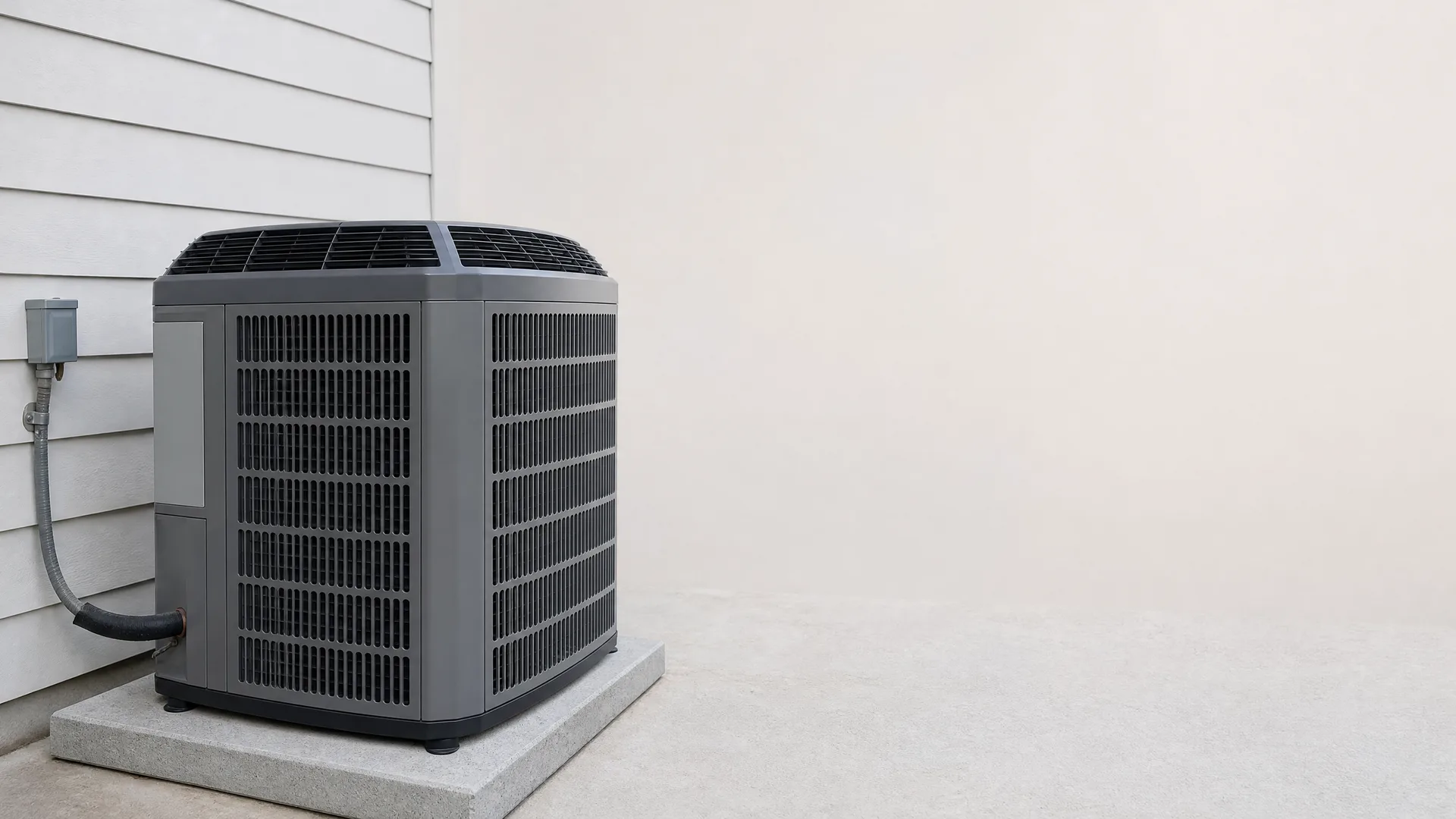
New Mexico air is dry most of the year, and dry air carries more loose dust than humid air does. That dust settles on the coil and on the heat strip inside the air handler when the system sits idle. When the AC kicks on after a stretch of not running, that dust is what burns off first. It is the same reason a dusty room smells different right after you turn on a fan that has been off.
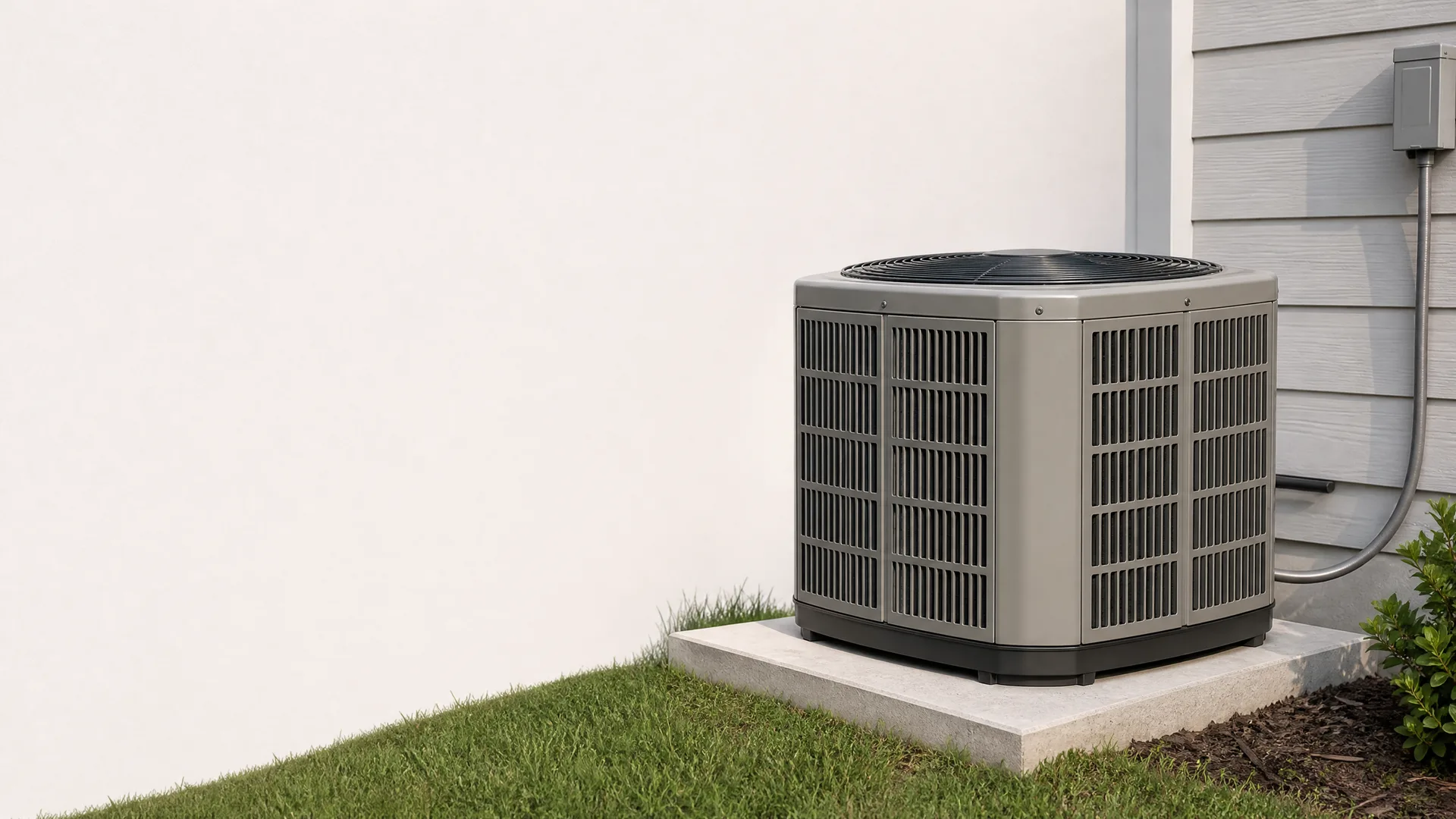
A fan motor that is working harder than it should often hums louder or runs a little rougher before it ever starts to smell. If you have noticed the outdoor unit sounding different over the past few weeks, that is worth mentioning when a contractor looks at it. The smell and the sound usually show up around the same time, since both come from the motor running hotter than it is built to run.
At 14.85 cents per kilowatt-hour, running your AC hard through a New Mexico summer already shows up on the bill. A burning smell means something is pulling extra power to do its job, a tired motor or shorting wire, and that strain costs you before the part gives out.
EIA-861 2025 statewide residential average
A smell that clears in a few minutes isn't pulling much from your wallet. Dust burning off a coil or a heat strip is a one-time thing each time the unit sits idle long enough to collect it. Once it's gone, the air coming through the vents is normal again, and the system is running the way it should. You might notice it a few mornings in June when the AC hasn't run overnight, then not again until the next cool spell breaks the cycle and dust has time to settle back onto the part.
A burning smell that doesn't clear, or comes back every time the AC cycles on, means a part is working harder than it should every single time it runs. Through a New Mexico summer, that's several hours a day, every day, of a motor or wire under strain instead of a few minutes. That strain can trip the breaker, shut the system down on a hot afternoon, or in a worse case, start an electrical fire inside the unit. The smell is the warning. Waiting on it means finding out the hard way on the hottest day.




Your request stays with one local pro.
There's no charge for the request.
Air comes in at the return, crosses the coil, then moves past the blower motor and out through the ducts to your vents. That order matters because a smell at the vent in the living room doesn't mean the problem is in the living room. It started back at the air handler, wherever that sits in your house, and the ductwork carried it the rest of the way.
A failing capacitor doesn't burn anything itself. It just stops giving the fan motor the steady push it needs, so the motor works harder and runs hotter than it should, and that heat is what reaches your nose. Wiring tells a similar story over time. Insulation around the wires inside the air handler takes a little heat damage every time the system cycles on, and after enough summers of that, it cracks. Once it cracks, a wire can touch bare metal and short, and that smell comes on fast, not gradually like dust burning off.
The condensate line is an easy one to miss. It runs close to the blower motor in most units, and if it clogs, water can back up near that motor long before you'd notice a puddle anywhere.
A contactor is a small switch that closes every time the AC starts a cycle, and when its contacts get pitted, it arcs a little each time. That arcing has its own burnt smell, and it's easy to blame on the ducts when the real source is a part the size of a matchbook.


Air pulls across the coil before it ever reaches the motor or heat strip.
Dust sitting on the coil or heat strip burns off first as the unit starts.
A failing capacitor forces the fan motor to run hotter than it should.
Heat from the motor breaks down wire insulation, giving off a sharper smell.
You keep smelling it right when the AC starts, then it eases off, then it's back the next time the unit kicks on. That pattern, rather than one smell that happened once, is the detail worth paying attention to. It usually means something inside the system is reheating each cycle instead of a one-time coating of dust that burns off and stays gone.
Dust burns off once and the smell is gone for good until the unit sits idle long enough to collect more. A smell that returns every cycle is different. It points to a part that heats up on its own each time the fan motor spins, a worn bearing, a failing capacitor forcing the motor to work harder, or wire insulation that's starting to break down from heat. With your system cycling on and off most days from June through September, that part gets stressed the same way every single time, which is why the smell shows up on a schedule instead of fading for good.

New Mexico summers run dry, and the air here holds little moisture. Averaged across June, July and August, the dew point sits at 45°F, among the lowest readings you'll see anywhere in the country, according to NOAA climate data. That dry air lets dust travel further and settle thicker on the coil and the heat strip inside your air handler. With more humidity, some of that dust would clump and drop away before it ever reached those hot surfaces. Here it just builds up, cycle after cycle, so the burning smell when your AC kicks on tends to show up sooner in the season and more often than it would somewhere muggier.
NASA POWER T2MDEW county cells weighted by homes

A quick smell that fades when the system starts is dust. A smell that keeps coming back, or smells like melting plastic, is a part working harder than it should. You know which one you've got by now, and that's really all you need to decide what happens next.
If it's the second kind, you want someone who's worked on AC systems through a New Mexico summer before, not just read about them. A local contractor who handles this equipment all season knows what tends to fail first in a unit that's been cycling on daily since June, and that's who gets matched to your call. Just the one contractor, so you're not fielding calls from three different companies while you're trying to keep your house cool.



A smell that clears fast is dust. One that keeps coming back, or smells like melting plastic, is a motor or a wire wearing out from the extra strain. Either way, running the system in that state through a New Mexico summer costs you on the power bill before it costs you the part. A licensed contractor near you who works on this equipment all summer can tell you which one you've got and get it handled, and you'll hear from just that one contractor, not a handful of companies competing for the job.
Your request goes to one pro, not a list of companies.
You only hire the pro if you want to.