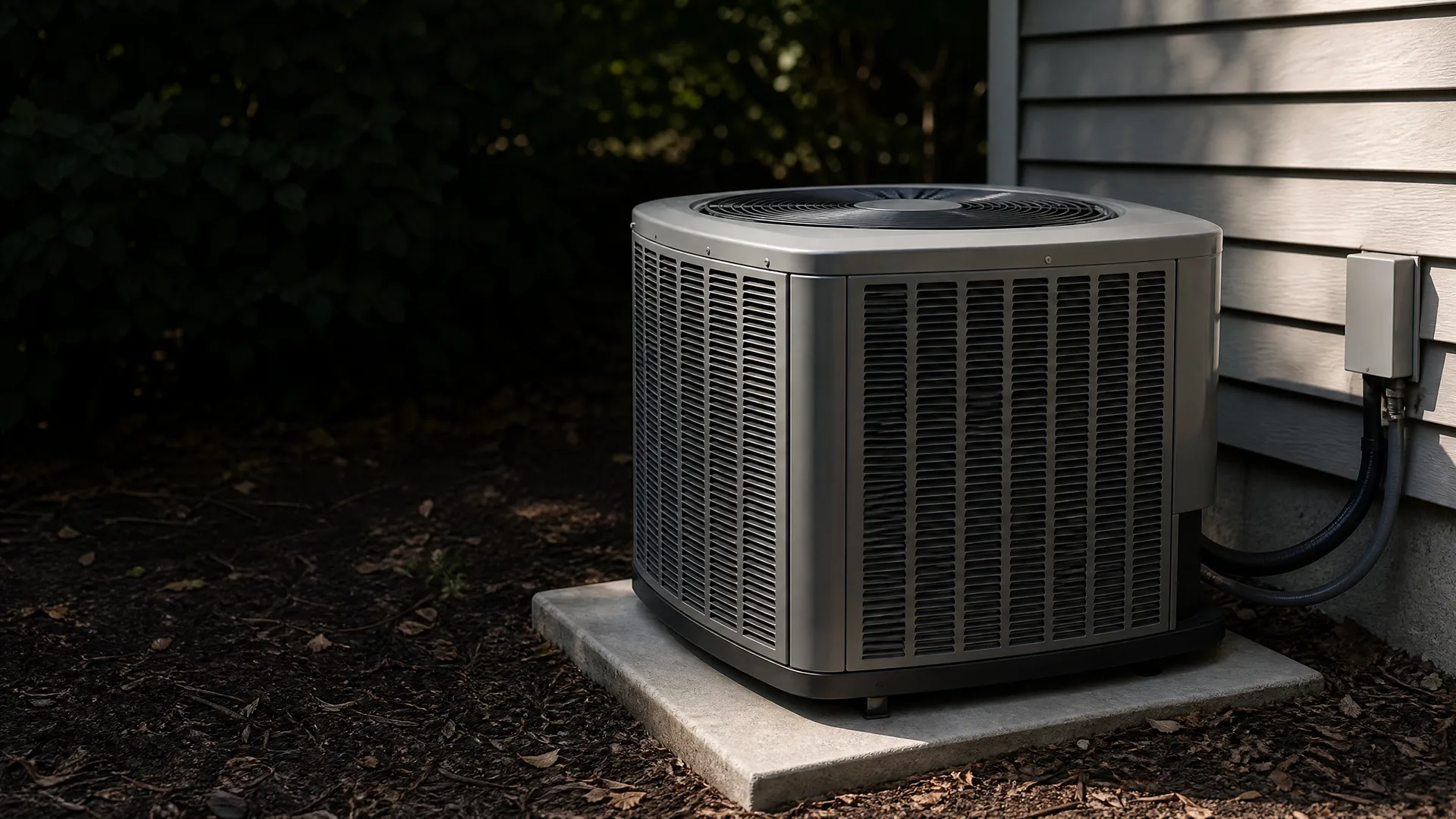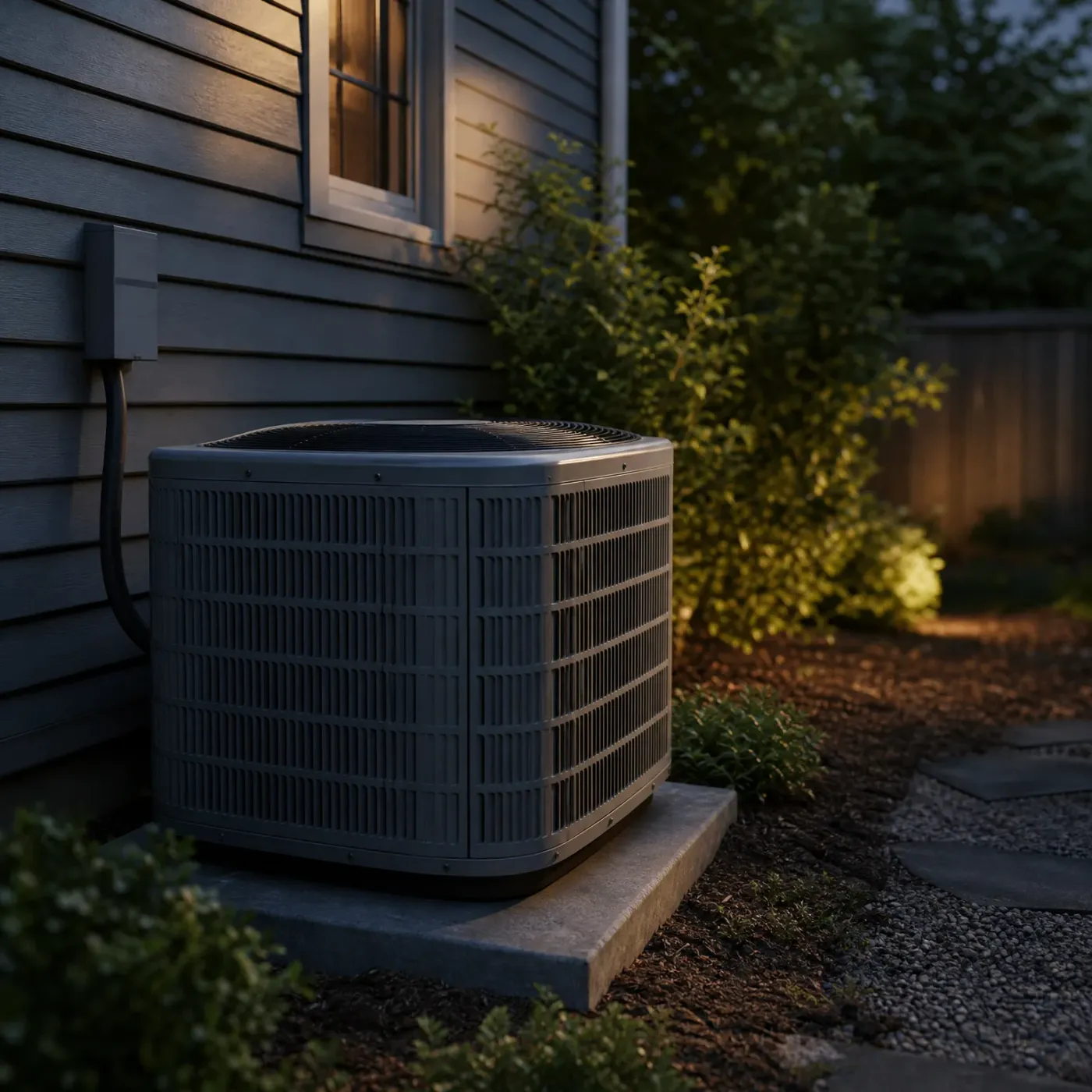

An outdoor air conditioner condenser unit on a concrete pad beside a gray horizontal-siding house at dusk, with a wall-mounted disconnect box, shrubs, and a gravel path with stepping stones nearby.

Let someone else find the pro

The R-410A phase-out and new AC units in New Mexico

R-410A is being phased out, and you want to know what that means for your AC before it dies on you in July. This page gets into what's changing, what it means if your unit needs a new compressor or a full replacement, and what it costs to get a new system in. Send the form and you're done hunting down contractors, calling around, and explaining your situation over and over.

Let a pro reach out

R-410A is not banned and your AC is not suddenly illegal. What changed is that as of 2025, manufacturers stopped building new residential air conditioners that use it. Equipment made before the cutoff can still be sold and serviced, and R-410A itself is still being produced to service existing systems, so if your unit uses it, repairs are not in danger right now. New units sold now run on R-454B, a refrigerant with lower global warming potential. The practical effect in New Mexico is mostly about replacement, not repair. If your AC is old enough that a breakdown this summer means a new system rather than a fix, that new system will use the new refrigerant, and that's a different installation than swapping in a like-for-like unit. In dry heat where an AC runs hard for months, a failure in July is the worst time to be sorting out what kind of system goes in next. Knowing this now, a season ahead, means that choice doesn't have to get made in a panic.

A gray outdoor air conditioner condenser unit on a concrete pad beside a house with white horizontal siding and a brick foundation, with a wall-mounted disconnect box and conduit, and a green shrub with mulch at left.

A working R-410A system

If your condenser looks like this, running clean on its pad with the lines and conduit intact, your system is fine as is. R-410A is still made and still legal to service. There's no reason to replace a unit that's working just because of what's happening to new equipment.


An outdoor air conditioning condenser unit on a concrete pad beside a house with white horizontal vinyl siding, with a gray electrical disconnect box and refrigerant lines on the wall behind it.

An aging unit near the end

Grime caked on the grille and top cover like this usually means years of runtime, not a quick cleaning fix. An older condenser working this hard in New Mexico's summer heat is closer to the point where a repair bill and a new system cost about the same.

Why does this matter if your AC still runs fine?

If your unit is still cooling your house through these hot, dry summers, you may not notice anything different yet. The change shows up the day something breaks. A dead compressor, a leaking coil, a technician telling you the part for your old R-410A system is back-ordered or priced high because fewer places stock it. With New Mexico summers running into the triple digits, a repair that drags on for weeks is harder to sit through than one that takes a few days. The risk isn't that your AC becomes illegal. It's that a July breakdown turns into a longer wait and a bigger decision than you planned for, right when you need the house cool.

A gray outdoor air conditioner condenser unit on a concrete pad beside a house with horizontal siding and a stucco foundation, with a disconnect box and conduit on the wall, decorative gravel, mulch, and a shrub nearby.

Running the way it should

A condenser on a clean pad, coil grilles clear, disconnect box intact on the wall. If yours looks like this, it's pulling R-410A through a closed system with nowhere to leak. Leave it alone and let it finish out its years.

An outdoor air conditioning condenser unit on a concrete pad beside a house with horizontal lap siding, with an electrical disconnect box and conduit on the wall, mulch and a green shrub to the right, and a concrete walkway in the foreground.

Dirt is where the trouble starts

Caked dirt on the coil grilles makes the compressor work harder to move heat, and a strained compressor is what eventually fails. If a repair calls for a part this unit no longer uses, replacement is the only path back to cool air.

If my compressor dies, do I have to replace the whole system?

A compressor failure is one of the most expensive things that can go wrong with an AC, so before you agree to anything, you want to know if there's a cheaper fix. With R-410A units being phased out of production, you're wondering if a compressor swap is even possible anymore, or if the refrigerant change forces a full replacement whether you want one or not.

In most cases, yes, because a matching compressor is getting harder to find

A compressor is matched to the refrigerant and the rest of the system when it's built. R-410A compressors still exist, and a contractor can source one and swap it on an older unit if the coil and lines are in good shape. The trouble is availability. With manufacturers no longer building new R-410A equipment, the supply of replacement compressors for it will keep shrinking. If your system is old enough that the coil or lines are also near the end of their life, a contractor may tell you a new system makes more sense than sinking money into a compressor for an outdated unit. That's a judgment call based on what they find, not a rule.

A man in a navy sweater reclines with closed eyes in a beige armchair in a living room, with a lamp, wooden cabinet, bookshelf, potted plant, and a side table holding a newspaper and mug nearby.
A man in a blue henley shirt reclines on a leather chair with his eyes closed, beside a window, a houseplant, a side table with a newspaper and a dark mug.
A man in a gray sweatshirt reclines with his eyes closed in a dark leather chair, with a bookshelf behind him and a side table holding folded newspapers, a mug, and a potted plant by a window.
A man in a blue sweater leans back on a brown leather chair with his eyes closed and a slight smile, in a room with bookshelves, framed pictures, a potted plant by a window, a folded newspaper and a dark mug on a table.

One request and it's handed off

A hot July with a dead compressor is a bad time to start learning about refrigerant transitions. If that happens, you're not just picking a part, you're deciding whether to patch an older R-410A system or move to the newer equipment replacing it, and every contractor in Albuquerque or Santa Fe or Las Cruces is fielding the same calls from other homeowners whose units picked this summer to quit. Normally that means you'd be the one doing the legwork: finding a handful of installers, explaining the same story to each, waiting on quotes, trying to tell who actually knows this transition from who's guessing. That work doesn't need to land on you. Send the request once and it goes to one contractor who installs AC systems and already knows what's changed and what hasn't, so you're not researching this alone with the house getting hotter by the hour. Your dry summers aren't forgiving about a system that's down for days while you sort out who to call.

What actually happens during a repair

  • A compressor failure doesn't just stop cooling, it can send metal shavings through the line set that have to be flushed before any new refrigerant goes in.
  • R-32 and other replacements for R-410A run at different pressures, so a swap means new line sizing, not just a refill.
  • Mixing refrigerants in the same system ruins the charge and can damage the compressor, which is why a tech pulls a full vacuum before adding anything new.
  • An R-410A system holds its charge for years unless there's a leak, so a unit running low usually has a crack in the coil or a bad fitting somewhere.
  • New R-32 equipment needs a leak detector and different service valves than older units, which is partly why it costs more to install right now.
  • A coil leak on an older system can sometimes be repaired, but if the coil is original to the unit, a tech will check whether parts are still being made for it.

A refrigerant system is closed. Nothing gets in or out unless something breaks it open, and that's what a tech is checking for first, not just whether the unit is low. If your compressor fails, the metal shavings it leaves behind travel through the line set, and those have to be flushed out before the system runs again, whether it stays on R-410A or moves to something else. If it's a leak instead, a tech finds the crack or the bad fitting, because R-410A doesn't just run low on its own over the years. Once the system is open, nothing new goes in until it's pulled down to a full vacuum. Skip that step and mix old refrigerant with new and the charge is ruined, which can take the compressor with it. This is also where the phase-out shows up in the actual work, not just the price tag. R-32 and the other replacements for R-410A run at different pressures, so swapping to one isn't a refill, it's new line sizing, new service valves, and a leak detector rated for the new refrigerant. That's part of why installing the newer equipment costs more right now. If the coil is original to your unit and it's leaking, there's a second question behind the repair: whether parts are even still being made for that coil, or whether the fix is patching something that's already on its way out.

Power costs 14.85 cents per kilowatt-hour statewide

At 14.85 cents a kilowatt-hour, every degree your AC has to work for in New Mexico's dry summer heat shows up on the bill. A new system sized and sealed right for your house keeps that number from creeping higher than it has to.

EIA-861 2025 statewide residential average

A gray-haired man in a blue quarter-zip sweater sits in an armchair with his eyes closed, beside a large window with bare trees outside and a potted plant and lamp nearby.
A woman in a cream knit sweater sits in an armchair with her eyes closed and head tilted back, beside a window showing orange autumn foliage and a wooden side table with a mug.
A two-story house with cream horizontal siding, a dark gabled roof, and a white front door, fronted by a lawn, shrubs, and a concrete walkway leading to a sidewalk and street, with large leafy trees on both sides.

New Mexico summers are dry, but dry doesn't mean easy on your AC. Averaged across June, July and August, the dew point here sits at 45°F, which is low next to a humid state, and it's part of why the heat feels manageable even at high temperatures. The tradeoff is that dry air pulls moisture out of everything, including the seals and gaskets in an aging R-410A system, and that's often where a slow leak starts. A unit that's lost some charge still runs, just weaker, and you'll notice it in longer run times and a house that takes more effort to cool down in the afternoon.

NASA POWER T2MDEW county cells weighted by homes

Fix the Part or Replace the System

Repair now

  • If the problem is a capacitor, a contactor or a fan motor, fixing that part keeps the R-410A system running without touching the refrigerant circuit.
  • R-410A is still being produced and serviced, so parts and refrigerant for your existing unit aren't disappearing this year.
  • A repair costs less upfront than a full replacement, since you're paying for one part and the labor to swap it.
  • If your unit is a few years into its life, a repair buys time without committing you to new equipment before you're ready.
  • A leak repair still needs enough working system left to hold pressure, so this only works if the cabinet and coil are otherwise sound.

Replace with new equipment

  • A new system uses one of the refrigerants built to replace R-410A, so it's matched to what manufacturers are making going forward.
  • If the compressor itself failed, replacing the whole system avoids paying for a used-up unit's refrigerant conversion plus a part that's just as old.
  • New equipment comes sized and sealed for your house, which matters in New Mexico's dry summer heat where a poor seal shows up fast on the power bill.
  • Replacement costs more at the time of the work, since you're paying for the full system instead of one part.
  • Once it's in, you're not relying on R-410A supply or parts for a unit that's aging toward its next failure.
  1. A tech confirms the refrigerant type and checks the system for leaks.

  2. The compressor and line set get evacuated to pull out old refrigerant.

  3. Old lines get flushed or replaced to match the new refrigerant's pressure.

  4. The new unit gets charged, started up and tested under a full load.

A wooden table in the foreground holds a closed laptop and a ceramic mug of coffee, with a spindle-back wooden chair behind it, a beige wall with paneled wainscoting, a window at left, and a kitchen counter with a cutting board, bowl of fruit and greenery at right.

R-410A isn't the emergency. Being unprepared for it is.

Your system is either fine or it isn't, and nothing about the phase-out changes which one is true. If it's running clean, let it run. If the compressor or coil is going, you're choosing between a repair and a new system sized for the refrigerant that replaced R-410A, and that choice is easier to make before you're standing in front of a dead unit in August.

What changes when you send the form is what's no longer on you. You won't be searching for a contractor while your house climbs past 85 degrees. You won't be calling three companies, explaining the same compressor failure three times, and sitting on quotes trying to figure out which one actually knows R-32 line sizing. Someone who works on this every day takes it from here.

A wooden table holding a stone vase with a bare branch, two stacked books and a small dark bowl, beside a window with green foliage outside and a sofa in the dim background.
An outdoor air conditioner condenser unit on a concrete pad beside a house with horizontal lap siding, with an electrical disconnect box and conduit on the wall and dark mulch and shrubs around it.

Done looking for an air conditioner pro

Step 1 of 3: Equipment