Dirty condenser coil
Dust and yard debris coat the outdoor coil fast in dry heat. A coil caked with grit can't shed heat well, so the compressor runs longer to cool the same air.

The biggest thing running up your AC bill in a New Mexico summer is a system working harder than it should to move heat out of a house that sits in dry, triple-digit heat for weeks at a time. Dirty coils, a clogged filter, or a low refrigerant charge all make the compressor run longer to hit the same temperature. Dry heat also means the air outside holds less moisture, so your system spends less effort on humidity than it would elsewhere, but it still has to fight the sun on your roof and walls hour after hour. A unit that's low on charge or caked with dust on the outdoor coil can run 20 to 30 percent longer than it needs to just to keep up. Regular maintenance, cleaning the coils, checking the charge, replacing the filter, catches these problems before they turn into a bill that climbs every July and August and keeps climbing until something gets fixed.




Dust and yard debris coat the outdoor coil fast in dry heat. A coil caked with grit can't shed heat well, so the compressor runs longer to cool the same air.
A system low on refrigerant loses its grip on humidity and heat alike. It keeps running past the point where a full charge would have already shut the compressor off.

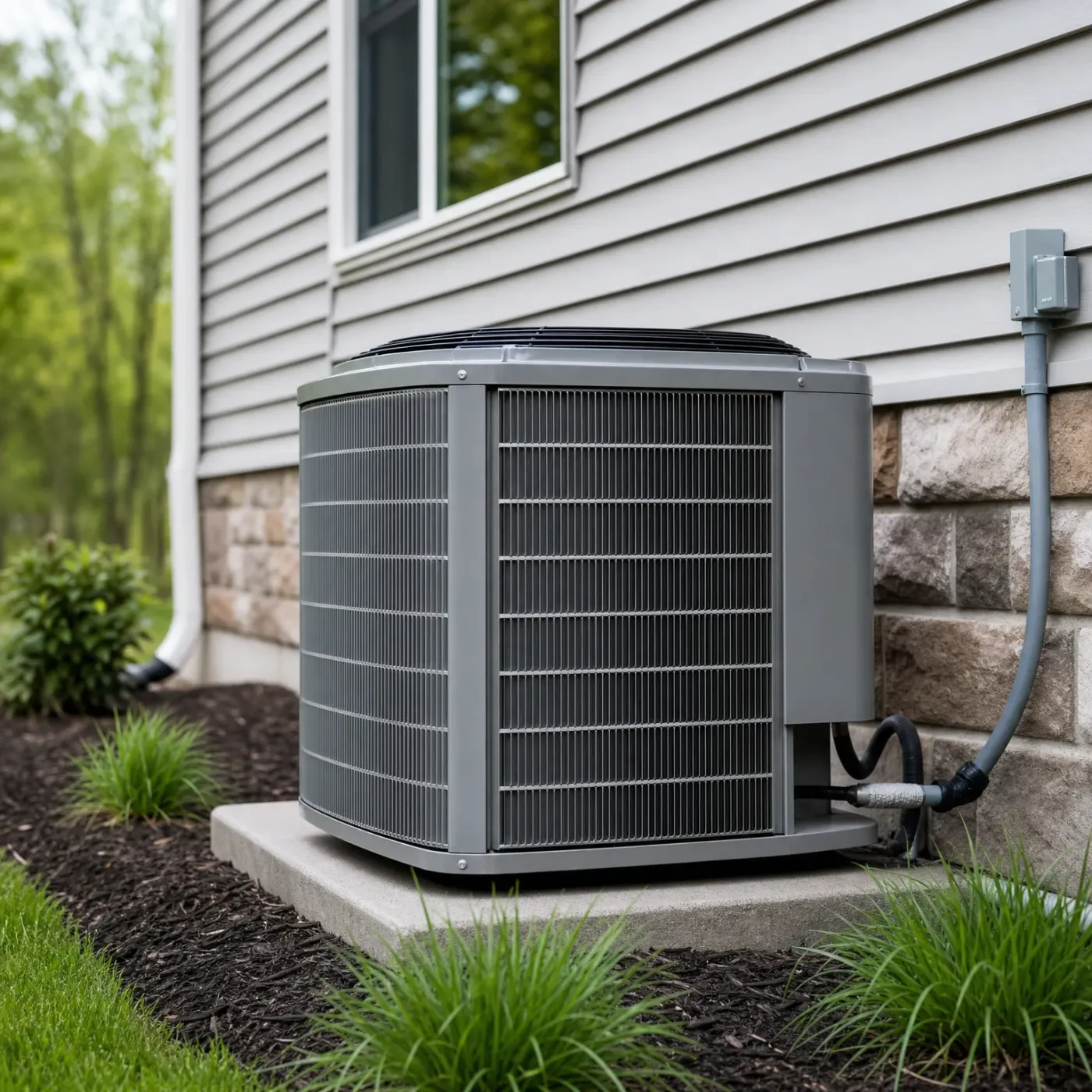
This condenser has clear airflow on all sides and a clean coil behind the louvers. It cycles on, pulls heat out of the house, and shuts off. In a New Mexico summer that means fewer hours of runtime to hold the same temperature and less strain on the compressor.

Weeds and gravel dust sit right against this coil, and years of exposure have left the housing weathered. Airflow through the coil is blocked, so the compressor runs longer to move the same heat. Left alone through another summer, it is working harder for less cooling.
By mid-afternoon in a New Mexico summer, the sun has had hours to heat the roof, the walls, and the air outside, and the gap between that outdoor temperature and your thermostat setting is at its widest for the day. You notice the compressor outside never seems to shut off from about 2 to 6 PM. That's worth understanding, because it changes what's worth checking first.
Some long runtime in the afternoon is normal. The temperature difference between outside and inside is biggest then, and the system has to move more heat to hold the thermostat setting. That's physics, not a problem. What turns normal long runtime into a stuck-on compressor is anything that keeps the system from shedding heat efficiently. A coil coated in dust, a clogged filter restricting airflow, or a refrigerant charge that's dropped all make the system move less heat per hour it runs. So instead of running hard for four hours and catching up, it runs hard for four hours and never catches up. Afternoon heat sets the demand. What's on the coil and in the lines decides whether the system can keep up with it.


The pro who reaches out is licensed in New Mexico.
Say what's going on with your air conditioner, and a pro who works on them reaches out.
You only hire the pro if you want to.


You don't need a gauge to know your system is struggling. You feel it in the house. The thermostat says 75 but the air coming out of the vent is warm, not cold, and the room never quite settles. You hear the unit kick on, run a few minutes, then quit and start again, over and over through the hottest part of the afternoon. That short cycling does two things at once. It wears on the compressor, the most expensive part in the whole system, and it still leaves some rooms warmer than others because the system never runs long enough to push cool air all the way through the house. Open the access panel on a bad day and you might find ice built up on the refrigerant line or across the indoor coil, even though it's 100 degrees outside. That ice is not a sign the system is working hard in a good way. It means something, usually weak airflow or a refrigerant charge that's off, is forcing the coil below freezing, and the unit is losing its ability to cool the air at all. None of this fixes itself as the summer goes on. A system fighting a dirty coil or a bad charge in June is usually the same system in August, just with more hours on it and more strain on the compressor. By the time it fails outright, the dollars spent running it inefficiently for weeks are gone, and what's left is a repair instead of a tune-up.
At 14.85 cents per kilowatt-hour, every extra hour your compressor runs shows up on the bill. A system that's clean and properly charged holds your set temperature with less runtime, which is where the savings actually come from, not the rate itself.
EIA-861 2025 statewide residential average

A coil that's clean and a charge that's correct let your AC shut off sooner instead of running the whole afternoon. That's the whole answer. Everything else on this page is just how to get there and how to tell if you're already there.
If you're not sure which of these your system has, that's worth getting a straight answer on rather than guessing through another summer. A contractor local to New Mexico who services this equipment all season knows which of these tends to go first in this heat, and you'll be matched with one who can look at your unit specifically and tell you where it stands. Just the one contractor reaching out, not a handful of companies competing for the job.


Only one pro gets your request, so you hear from one company.
Asking costs nothing, and the choice to hire stays yours.