






How to get your AC ready for a New Mexico summer

Fill out one form instead of calling around for an air conditioner tune-up.

Step 1 of 3: Equipment

Getting your AC ready for summer here means having it checked before the heat sets in, usually sometime in March or April before the hot stretch starts. A contractor checks the refrigerant charge, cleans the condenser coil outside, and tests the capacitor and electrical connections. New Mexico summers run hot and dry, and your AC will run for months straight with barely a break once that heat arrives. A unit low on refrigerant or working through a dirty coil has to run longer to cool the same house, and that strain is what causes a breakdown on the afternoon you need it most. Dust and grit from dry conditions build up on the coil and in the cabinet faster than in wetter climates, so that cleaning matters more here than it might elsewhere. Catching a weak part in spring means a repair on your schedule, not an emergency call when it's 95 degrees and every other homeowner in town is calling too.

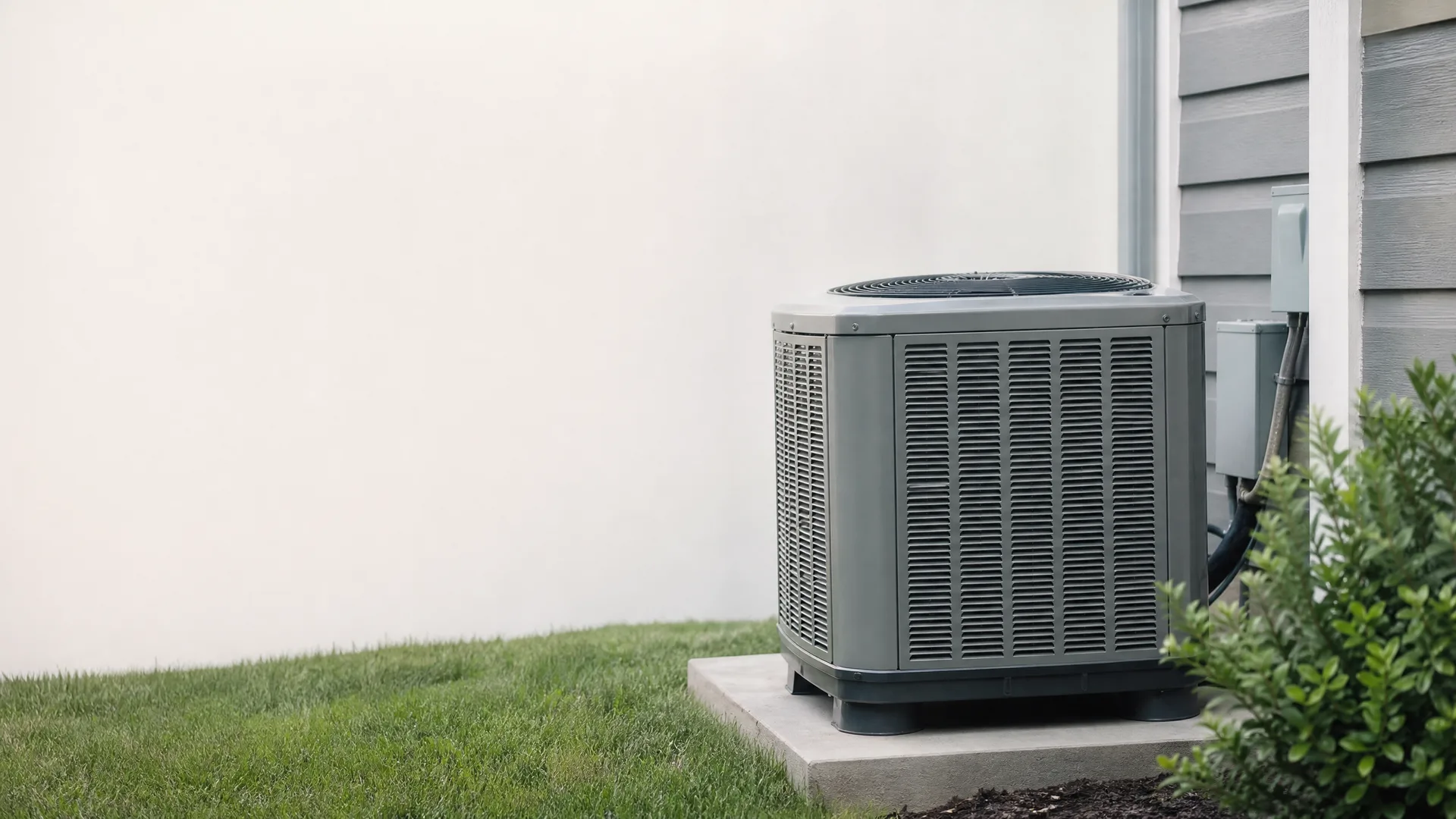
A gray outdoor air conditioner condenser unit on a concrete pad beside a house corner with lap siding and a stucco wall, surrounded by mown green grass.

Why the condenser coil matters most

That coil sits outside and dumps heat from your house into the air around it. Dust and caliche grit settle into the fins all winter, and by March they're thick enough to block airflow. A blocked coil makes the compressor work harder to move the same heat, and it runs hotter doing it. Cleaning that coil before the heat arrives is one of the few things that directly affects how long the compressor lasts.

An outdoor air conditioning condenser unit on a concrete pad beside a house with light stucco and lap siding, with mown grass to the left and a green shrub to the right.

What a dry climate does to seals

Low humidity dries out rubber faster than a damp climate does. The gaskets around your refrigerant lines and the seals on the compressor itself get brittle from months of dry heat and hard sun. A brittle seal is where a slow refrigerant leak usually starts, not at the coil or the lines themselves. Catching that in spring, before the system runs flat out for months, is cheaper than catching it in July when the charge has already dropped.

Why does my AC blow warm air after sitting all winter?

Your AC sat unused since October or so, and now that the weather's turning you flip it on and get warm air out of the vents for the first few minutes, sometimes longer. You're not sure if that means something's actually wrong or if it's just what happens when a unit hasn't run in months. Either way you want to know before you're relying on it every day.

It's usually just the lines clearing out, but not always

A system that's sat all winter has refrigerant that's settled and oil that's thickened in the compressor. When you first start it, it can take a few minutes to circulate properly and build the pressure it needs to cool. Warm air for the first five or ten minutes, then cold after that, is normal after months off. Warm air that doesn't change after twenty minutes is different. That points to low refrigerant from a slow leak, a capacitor that weakened over the winter, or a contactor stuck from sitting idle. A contractor can tell which one it is by checking the charge and testing the electrical components, something worth doing before you need the system every day through the heat.

  1. Contractor measures refrigerant pressure at the service valves

  2. Condenser coil gets washed clean of dust and caliche grit

  3. Capacitor gets tested under load for weak startup power

  4. Contactor points get checked for pitting and burn marks

Is your AC already telling you something's off

You might've noticed the air isn't as cold as it used to be, or the unit runs longer to get the house to the same temperature. Maybe you hear a rattle or a hum from the condenser outside that wasn't there last year, or a burnt smell when it first kicks on. Ice on the lines, water pooling near the indoor unit, or a breaker that trips when the AC starts are all signs something's wearing out. Left alone through a New Mexico summer, a small problem like a weak capacitor or a dirty coil tends to turn into a compressor that fails on the hottest day, and a house with no cooling until someone can get out to fix it.

An outdoor air conditioning condenser unit on a concrete pad beside a house with horizontal lap siding, with a conduit and electrical disconnect box on the wall at right.
Before you get your air conditioner maintenance
A gray outdoor air conditioner condenser unit on a concrete pad beside a house with horizontal lap siding, with a wall-mounted disconnect box and conduit to its right and shrubs to the left.
After you get your air conditioner maintenance

No phone calls to make

A licensed local pro takes the request for your air conditioner tune-up.

It costs nothing to send, and you don't have to hire anyone.

A gray outdoor air conditioning condenser unit on a concrete pad beside a house with horizontal siding and a stone veneer base, with a wall-mounted disconnect box and conduit, next to a shrub bed and a concrete patio.

A condenser that's kept up with the dust

The fins are clean and the fan spins free, pulling full airflow across the coil. On a June afternoon this unit holds its charge and cycles the way it was built to, keeping the compressor out of the strain that caliche grit and a dirty coil cause.


An outdoor air conditioner condenser unit on a concrete pad beside a house with light gray vinyl siding, with a gray electrical disconnect box and conduit on the wall, gravel beds and dried plants nearby, and a concrete sidewalk in the foreground.

A condenser left to the weeds and grit

Dried weeds crowd the pad and the housing shows its age. A coil caked with dust from last fall has to work harder to shed heat, and that strain shows up as longer run times, warmer air at the vents, or a compressor that quits before August.

A smiling woman with dark shoulder-length hair in a cream V-neck sweater sits at a marble counter with a glass of red wine, with a kitchen and softly lit living room behind her.
A woman in a dark green sweater laughs while seated at a marble kitchen island with a glass of red wine, with open shelving, cabinets and a living room visible behind her.
A woman with long dark hair in a cream knit sweater laughs while looking off to the side, seated at a counter with a glass of red wine, in a dimly lit living room with a sofa, lamp, framed pictures and houseplant behind her.
A smiling woman with long dark hair in a beige sweater sits at a marble kitchen counter with a glass of red wine, with a dimly lit living room behind her.

Getting it checked yourself in spring

You can wash down the condenser fins with a garden hose and clear the caliche dust off by hand. You can swap the filter every month through the summer and keep weeds and yard debris cleared from around the unit. That's real work and it's worth doing. What you can't do without gauges is check the refrigerant charge, and a system running low won't necessarily tell you with anything louder than a slightly warmer house. You also can't load-test the capacitor or check the contactor points for pitting, and both of those tend to fail on the first hot day in June rather than give warning first.

Having a contractor check it in spring

A contractor brings gauges to check the refrigerant charge against what the system actually needs, not a guess. The capacitor gets tested under load, not just looked at, so a part that's about to fail shows up before it does. Someone who works on these systems all over New Mexico every spring has a sense of which parts give out first in this heat and checks those first. You still get the most good out of this by keeping the filter changed and the coil clear between visits. The spring check catches what you can't see or test from the outside, and it does it before the heat sets in, not after the unit's already struggling with it.

Power costs 14.85 cents per kilowatt-hour statewide

At 14.85 cents per kilowatt-hour, every hour your AC runs long because of a dirty coil or a weak capacitor shows up on the bill. A unit that's been checked and cleaned before the heat hits doesn't have to work as hard to cool the house, so it draws less to do the same job.

EIA-861 2025 statewide residential average

Finding someone yourself means calling a few shops, explaining the same thing each time, and waiting on quotes to compare before anyone even looks at your unit.

One request connects you with a licensed New Mexico contractor who services AC units all season and already knows what caliche dust and a hard summer tend to break first.

A smiling bearded man in a navy sweater sits at a candlelit dinner table with a glass of red wine, a bowl of salad, and plates of food in the foreground.
A woman with dark hair in a bun reclines on a sofa with her eyes closed, wrapped in a cream fleece blanket, a closed blue hardcover book resting in front of her, with a lit lamp and a vase of dried flowers in the background.
A closed dark laptop and a ceramic mug of coffee on a wooden dining table, with wooden chairs, a dark kitchen cabinet with cutting boards and a potted plant, and a leafy plant by a window in the background.

What this comes down to

Get your AC looked at before the heat sets in, sometime in March or April, so the coil is clean and the capacitor is strong before your unit has to run all day. That's the whole answer. A contractor who checks it then catches the weak part before July asks it to carry a house that's 95 degrees outside.

You could spend an evening calling around, telling two or three shops the same thing about your unit and waiting on quotes before anyone comes out. One request instead puts you in touch with a licensed New Mexico contractor who works on these units all season and already knows what caliche dust and a hard summer tend to do to them. You make one call, not several, and you're not explaining yourself twice.

Interior corner of a living room with a beige upholstered sofa and dark cushion in the foreground, a ceramic vase of leafy branches on a dark side table by a curtained window, a framed picture on the wall, and a wood-surround fireplace at right.
A covered porch with a wood front door with six upper glass panes, a lantern wall sconce, tapered column on a stone base, potted ferns and flowers, a woven doormat, and wide steps leading to a paver walkway bordered by shrubs and white hydrangeas.
A beige upholstered sofa with a cream cushion and chunky knit throw sits beside a white-framed window, with a leafy potted plant in a stone vase against a tan wall.
Sunlit corner of a room with a linen curtain beside a window, built-in shelves holding ceramic vases, wooden bowls, a potted green plant, stacked books and a woven basket, above a textured rug.
A dark wood three-drawer dresser against a pale wall holds a tall ceramic vase with leafy branches, stacked books and a shallow bowl, with a framed print above, a woven basket on the wood floor at left, and an upholstered sofa with a green pillow in the foreground.
A cream upholstered sofa with a textured ivory cushion and a rust-colored cushion sits beside a window with sheer linen curtains, with a potted leafy plant behind it and a wooden bowl on a wood table in the foreground.

One form, no calling around

Only one pro gets your request, so you hear from one company.

Find a licensed pro

No charge to send it. You decide if you hire them.











