Send the form, and lining up the air conditioner tune-up stops being yours to chase.
On a hot day here, your AC should be running long stretches, sometimes close to nonstop once the afternoon sun hits. That's normal for New Mexico heat. What's not normal is when it runs that long and the house still isn't cooling down, or when it shuts off and on every few minutes instead of settling into a steady cycle.
Dry heat puts a different load on a system than humid heat does. Your AC isn't fighting moisture the way one in a wetter state would, but it's still fighting hours of strong, direct sun and triple-digit afternoons for weeks at a time. A system that's low on refrigerant, or one with a dirty coil, or a weak capacitor, will run longer than it should and still fall behind. That's extra strain on the compressor, and it shows up on your power bill even though power here is priced like anywhere else.
Regular maintenance is what keeps the runtime where it belongs. A technician checks the refrigerant charge, cleans the coil, tests the capacitor and the contactor, and makes sure the system isn't working harder than it has to just to keep up with a New Mexico summer.
Finding someone to do that work usually means searching around, calling a few companies, explaining what the system is doing to each one, and waiting on quotes to compare. That part ends here. Once you send the form, you're not the one tracking down a contractor anymore. Someone qualified gets the details of your situation and takes it from there, and the search is off your plate.
How long should my AC run on a hot day in New Mexico?
You're watching the thermostat on a 100 degree afternoon and the AC just keeps going. You want to know if that's your unit struggling or just what summer here does to an air conditioner, and at what point a long run turns into a sign something's wrong.
Long runtimes are normal, short cycling is not
An hour or more of steady running on a 100 degree day is normal here. The dry heat and the gap between outdoor and indoor temperature mean your AC has more work to do to pull the house down to 72 or 74, and it can run most of the afternoon doing it. What matters more than the length of the run is whether the house actually gets there and whether the unit shuts off and restarts every few minutes instead of running one long stretch. A system that short cycles on a hot day, or runs nonstop without the house cooling, is telling you something is off, even if the long runtime itself is just New Mexico summer.
Running long because it's 100 outside
A unit that stays on for long stretches on a 100 degree afternoon and still brings the house down to the set temperature is doing its job. The coils are clean, the airflow is steady, and the dry heat is just a hard pull on any system.
Running long and losing ground
Dirt caked on the fins and the grille blocks the airflow the unit needs to shed heat. It runs the same long hours but the house stays warm, the compressor works harder than it should, and the strain shows up on the power bill before it shows up as a breakdown.
Why does my house still feel warm with the AC running
You check the vents and the air coming out feels weak, or barely cool. The thermostat says it's close to the set temperature but the rooms don't match it. Maybe you hear the outdoor unit cycling on and off more than it used to, or it's humming along but the house stalls at 80 instead of coming down to 75. Dust on the return grille, a furnace filter you haven't changed in a while, a smell like something's warm when the system kicks on. None of that means the AC is finished. It usually means it's working harder than it should to get the same result, and on a 100 degree day that's the difference between cool and just less hot.
Late May, early afternoon, the sun already hard on the side yard. You walk past the condenser to drag the trash can back and notice the cottonwood fluff has caught on the fins again, a thin white mat over the whole face of the unit. It's been drifting for weeks, settling on the grass, the windowsills, now the coil. The fan is running, pulling air through that fluff instead of past it. Inside, the house is a few degrees warmer than the thermostat says it should be. You make a note to clear it off with the hose before it packs in tighter, then head back inside out of the heat.
Clean coils, steady airflow, and the unit runs its long stretch and still gets the house to temperature.
Coils packed with dust choke the airflow, so the unit runs just as long but can't catch up to the set temperature.
Fill out one form instead of calling around for an air conditioner tune-up.
No fee to send it, and nothing to sign.
What a dirty coil costs you
The outdoor coil moves heat out of the refrigerant and into the air outside. A thin layer of dust or cottonwood fluff across the fins cuts how much heat it can shed. The compressor keeps running the same long stretch, but less heat leaves the system each minute, so the house takes longer to drop those last few degrees. A technician can check the coil against the airflow and clean it if it's the cause.
What steady airflow means inside
Every vent in the house is sized for a certain amount of air moving through the ducts. A clogged filter or a blower losing strength restricts that air, so even a healthy compressor can't deliver the cooling it's making. Rooms farthest from the air handler feel it first, staying a few degrees warmer than the rest of the house. Maintenance checks the filter and blower together, since either one can hold the whole house back on a 100 degree day.
Keeping Up or Falling Behind
Runs long but keeps up
The house still reaches the set temperature by evening, even if it took most of the afternoon.
The air coming out of the vents feels noticeably cooler than the room, not just faintly cool.
The outdoor unit cycles off at some point overnight once the heat backs off.
Your power bill reflects a hot month but didn't jump sharply compared to last summer.
The thermostat holds steady once it hits the set point instead of climbing back up.
Runs long and falls behind
The house is still a few degrees above the set temperature when the sun goes down.
The unit runs through the night without shutting off even after the outside temperature drops.
Vent air feels only slightly cool, not the sharp cold you'd expect on a 100 degree day.
Rooms farther from the thermostat stay noticeably warmer than the room the thermostat sits in.
The compressor sounds like it's working harder, with longer or louder cycles than past summers.
Your bill climbs well past what the heat alone would explain.
Before you get your air conditioner maintenanceAfter you get your air conditioner maintenance
New Mexico's dry heat gets talked about a lot, but the dew point tells a different part of the story. Averaged across June, July and August over where homes sit in the state, it runs 45°F, well on the dry side. That's good news for your AC. Dry air gives the coil an easier time shedding heat, so the system isn't fighting moisture on top of the temperature outside. A unit in good shape, coils clean, airflow clear, should turn that dryness into real cooling, not just a long run time that never quite gets there. Source: long-term summer climate averages for New Mexico.
NASA POWER T2MDEW county cells weighted by homes
Runs most of the afternoon, house still hits set temperature by evening
Long run times in July and August are normal here. If the house catches up once the sun drops, the unit is keeping pace with the heat, not losing to it.
Runs the same long stretch, house never quite gets there
Same hours on the compressor, but the house is still a few degrees off at bedtime. That gap is worth having a contractor look at before the hottest part of summer.
Power costs 14.85 cents per kilowatt-hour statewide
At 14.85 cents a kilowatt-hour, a unit that runs long on a 100 degree day is already costing you something fair. The number climbs when coils are dirty or airflow is weak, since the compressor works the same long stretch for less cooling. Keeping it clean is what keeps that rate from working against you.
EIA-861 2025 statewide residential average
Unit running clean
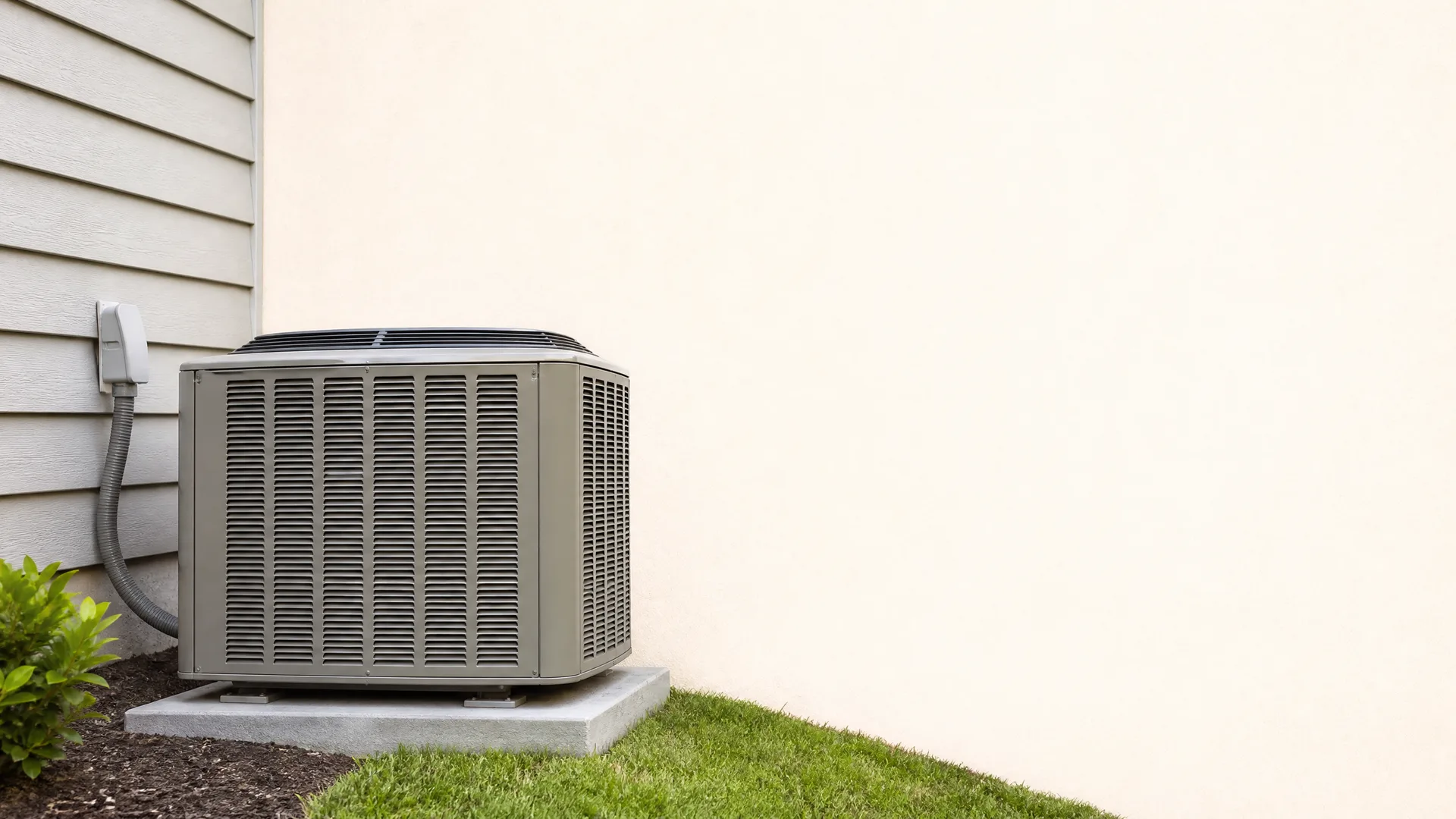
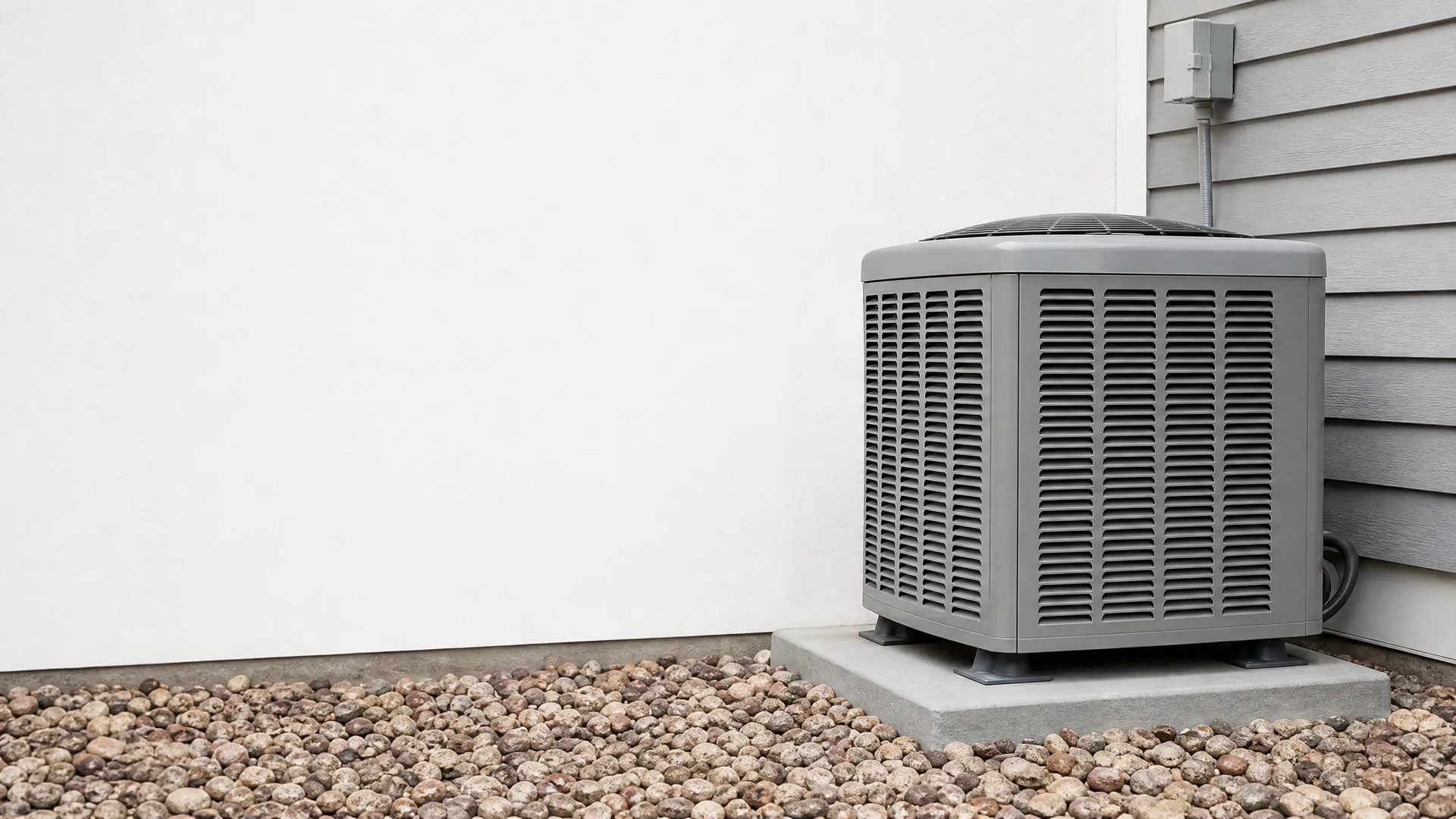
This is what a healthy setup looks like outside. The cabinet is clear, the fins are open, and air moves through the coil the way it's built to. On a 100 degree day it runs long and still gets the house to temperature by evening.
Unit choked with grime
This is what cuts a unit's cooling short on a hot day. Dirt and debris packed across the coil fins block airflow, so the compressor runs the same long stretch but sheds less heat. The house falls behind and stays warm even as the unit keeps running.
A long run time on a hot day isn't the problem. The problem is a long run time that still ends with a warm house, and by now you know the difference between the two. If your unit is keeping up, there's nothing to fix. If it isn't, the coils, the airflow, or the refrigerant charge are behind it, and a maintenance visit is what sorts out which one. Instead of searching through contractors, calling a few, explaining the same thing about your thermostat and your afternoons each time, and sitting with quotes to see which one makes sense, you send one form and the rest is off your plate. Someone licensed to work on your system takes it from there. You already know what your AC should be doing on a day like this. Now you know what to do if it isn't.