Central AC is the better fit for most New Mexico homes, and the dry heat here is the reason why. Your air conditioner cools the air mostly by pulling moisture out of it, and with humidity this low, that part of the job is already done before the air ever reaches the coil. So the system spends its effort where it should, dropping the temperature, and it does that well in dry heat. A mini split can cool a house just as effectively, but it earns its keep in homes without ductwork, or in a room an existing system can't reach, like a converted garage or an addition. If your home already has ducts and gas heat, running central AC through that same ductwork is the simpler path. If you're adding cooling to a space with no ducts at all, a mini split avoids tearing into walls to build them.
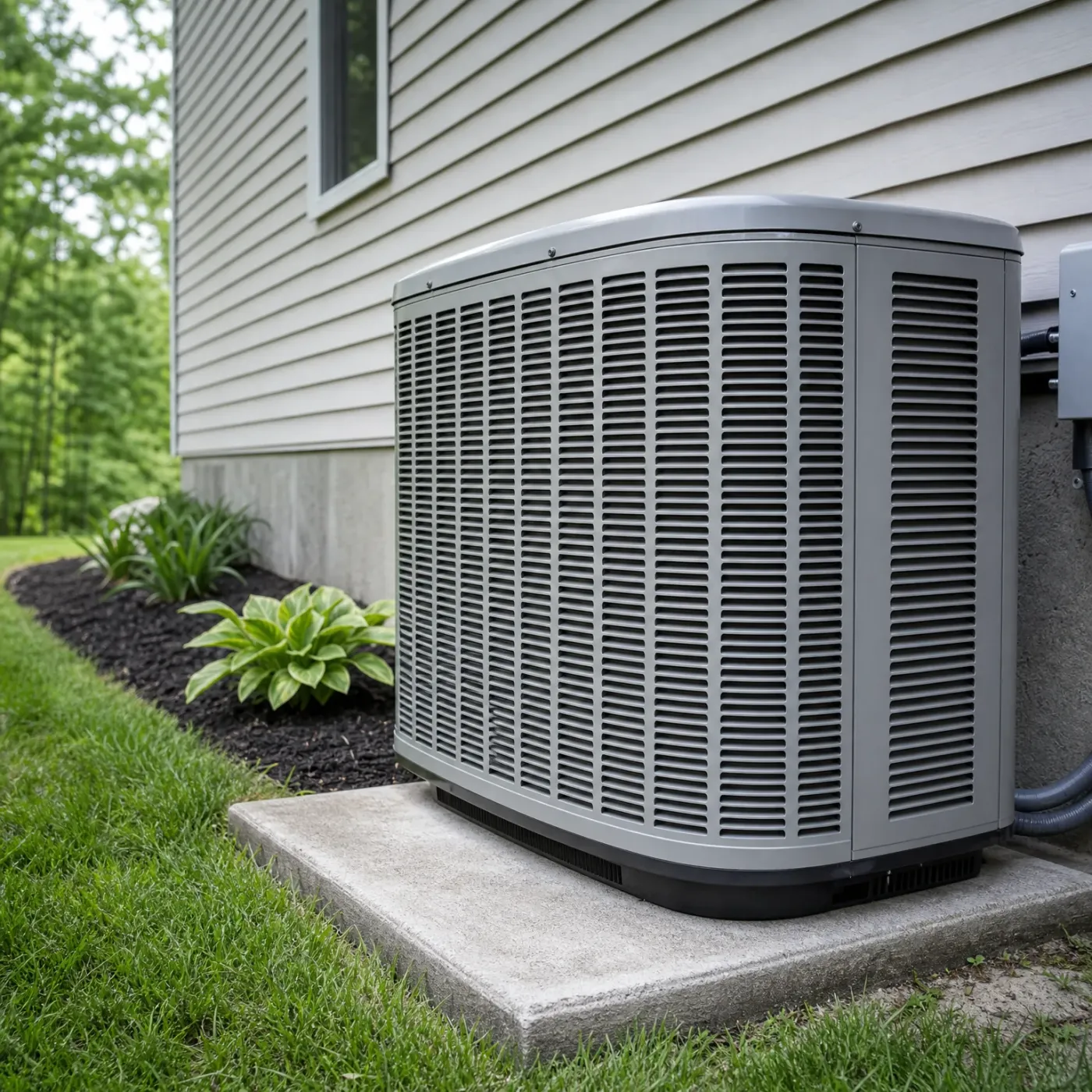
A central condenser like this works best on a dedicated circuit with ducts sized for your home, moving dry desert air through the whole house evenly.
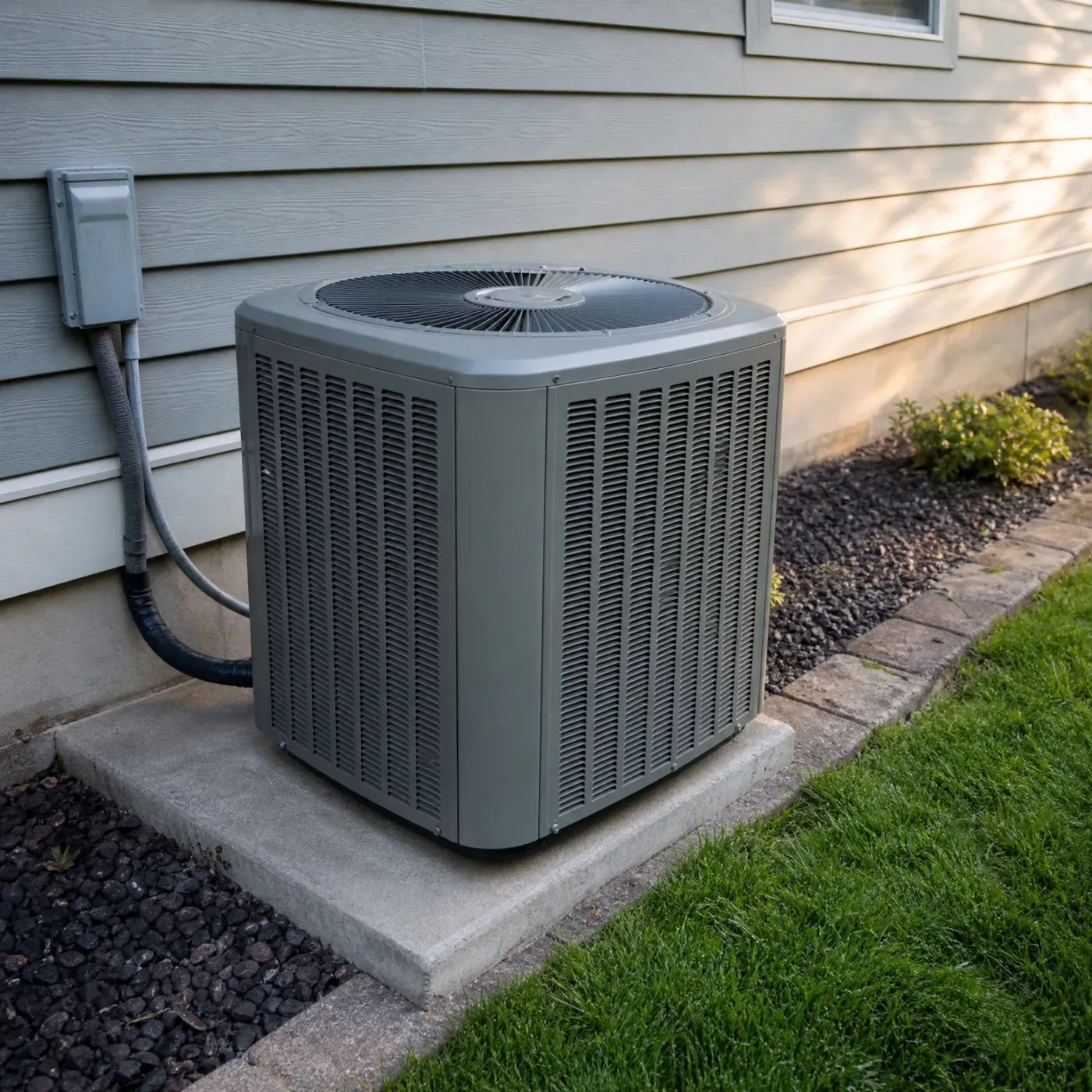
A unit left to run hard every summer without a checkup shows it in dirt and age, and ductwork problems can quietly cut the cooling you're paying for.
The outdoor condenser and the indoor coil move refrigerant between them, and a blower pushes house air across that coil before sending it back out through the ducts. In a dry climate, the coil picks up whatever little moisture is in the air before it does much else, which is why sizing matters more here than in a humid state. A system sized right for your house reaches the thermostat setting and holds there. One sized too big for the house cycles fast, cooling the room quickly but shutting off before it's run long enough to clean the dust out of the air passing through. The refrigerant charge also has to match the length of the line set and the coil it's paired with. Get that wrong at installation and the system runs longer than it should and still can't hold the temperature on a hot afternoon. Even then, the condenser is only half the job. Static pressure inside the ducts decides whether the bedroom down the hall gets air as cool as the room where the thermostat hangs.
How Central Air Actually Cools
A central system cools by running refrigerant through an outdoor condenser and an indoor coil, with a blower pushing air across that coil and out through your ducts.
In dry heat the coil pulls what little moisture is in the air first, so a unit sized for your house reaches the thermostat setting without overcooling the air to wring out humidity it doesn't have.
An oversized condenser cycles on and off fast, cooling the house quickly but shutting down before it runs long enough to pull dust out of the air moving through the ducts.
A unit sized to the house and the duct run holds a steadier temperature through a 105 degree afternoon instead of racing to keep up and falling behind.
The refrigerant charge has to match the line length and the coil, and a charge set wrong at installation shows up later as a system that runs long and still can't hold 75 inside.
Static pressure in the ducts, not just the size of the condenser, decides whether the air reaching the far bedrooms is as cool as the air at the room with the thermostat.
Before you get your air conditioner installationAfter you get your air conditioner installation
A condenser running the way it should
This one sits clean on its pad, lines running straight to the disconnect box. No rust, no strain on the fan. In dry heat like this, a unit in good shape keeps up through the hottest afternoons without working harder than it has to.
A condenser showing its age
Weathering like this on the cabinet usually means the inside has seen the same years outside has. A contractor who works on these every summer can tell you if it's still worth repairing or if it's time to replace it before it quits on the hottest day.
Skip the search
One installer gets your project, so there's no bidding war over it.
Skip the round of in-home estimates for a new air conditioner.
Asking costs nothing, and the choice to hire stays yours.
Central AC or Mini Split
Central AC
Ductwork already in most New Mexico homes means installation usually works with what's there instead of adding new venting throughout the house.
A central system cools every room off one thermostat, so you aren't walking between rooms adjusting separate units.
Outdoor condensers here deal with dust and heat, so the pad, the disconnect box and the refrigerant lines need a clear check each season.
Replacing a central system typically means matching the new condenser and coil to the ductwork already sized for your house.
One thermostat and one system mean one point of failure, so a bad capacitor or a failed fan motor can take the whole house off cooling.
Mini Split
A mini split cools room by room, so a casita or a converted garage without ducts can get air conditioning without cutting into walls.
Each indoor head has its own small filter and coil, so upkeep means checking several units instead of one return and one coil.
No ductwork means no duct leaks, which matters less here since most homes already have ducts in place for gas heat.
Running several heads instead of one blower pulling air through sized ducts can mean less even cooling across a larger home.
Install means mounting outdoor units and running refrigerant lines to each head, work that's separate from the ducted system most New Mexico homes already have for heat.
Power costs 14.85 cents per kilowatt-hour statewide
At 14.85 cents a kilowatt-hour, running central AC through a New Mexico summer shows up plainly on your bill. A condenser matched to your home's size and a clean, sealed duct run won't waste power keeping up on the hottest days.
EIA-861 2025 statewide residential average
Central air, matched to your house, handles a New Mexico summer best
For most homes here, a central system is the right call. Ducts are already in place, the thermostat covers the whole house, and dry heat is exactly what that setup handles well. A mini split earns its place in a room or an addition with no ducts running to it, but that's the exception here, not the rule.
Getting to that answer on your own means finding a contractor who still works on central systems in a market full of mini split installers, explaining your house and your ductwork more than once, then sitting with quotes that size things differently. A local contractor who installs central AC every summer in this heat already knows what a New Mexico duct run needs and what size condenser your house calls for. One contractor, one visit, one answer you can act on.